Week 1 – IT Service Management (ITSM) Overview
This week in our IT Service Management (ITSM) course, we started by defining the class rules and setting expectations for active participation and collaboration. More importantly, we explored what ITSM is and why it matters in organizations. ITSM is a structured approach to designing, delivering, managing, and improving IT services, with the goal of ensuring that IT contributes value to the business or organization.
We also learned the difference between products and services. Unlike products, which are tangible, IT services are intangible and co-create value together with customers. This co-creation occurs because both the provider and the user interact and contribute to the value derived from a service. To understand this better, we studied the ITIL 4 Service Value System (SVS), which integrates components such as governance, practices, and continual improvement to ensure value creation through IT services.
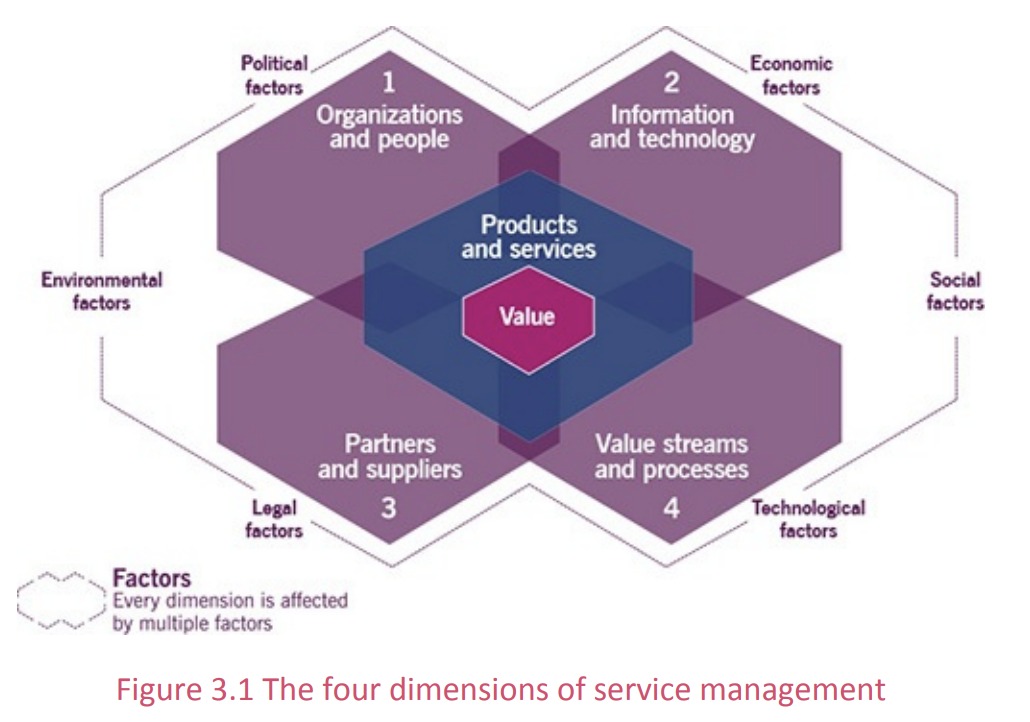
A core part of ITSM is understanding the 4 dimensions of IT service management:
- Organizations & People – the roles, responsibilities, and skills required.
- Information & Technology – the software, systems, and infrastructure that support services.
- Partners & Suppliers – external entities that contribute to service delivery.
- Value Streams & Processes – how value is created and delivered through structured activities.
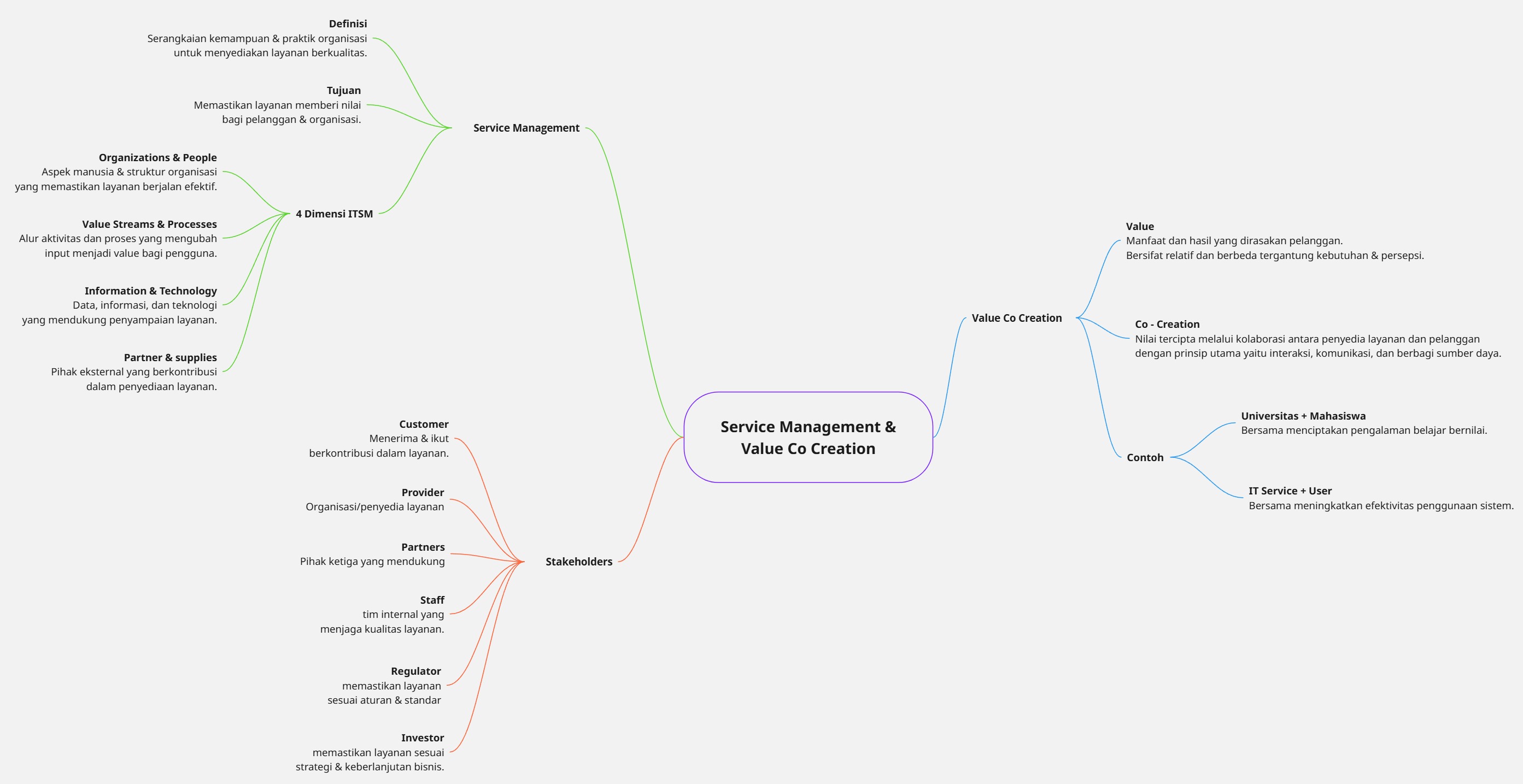
Mind Map: Four Dimensions of ITSM
Here is the Mind Map I created summarizing the four dimensions of ITSM:
Case Study: University Email Service Down
Background:
The university relies heavily on its email service (Microsoft 365) for official communication among students, faculty, and staff. IT Services manages the system, while a cloud provider hosts the infrastructure.
Incident:
- Time: Monday morning, 9:00 AM
- Event: Students and faculty are unable to send or receive emails. Login attempts return error messages.
- Duration (so far): 2 hours and ongoing
Impact:
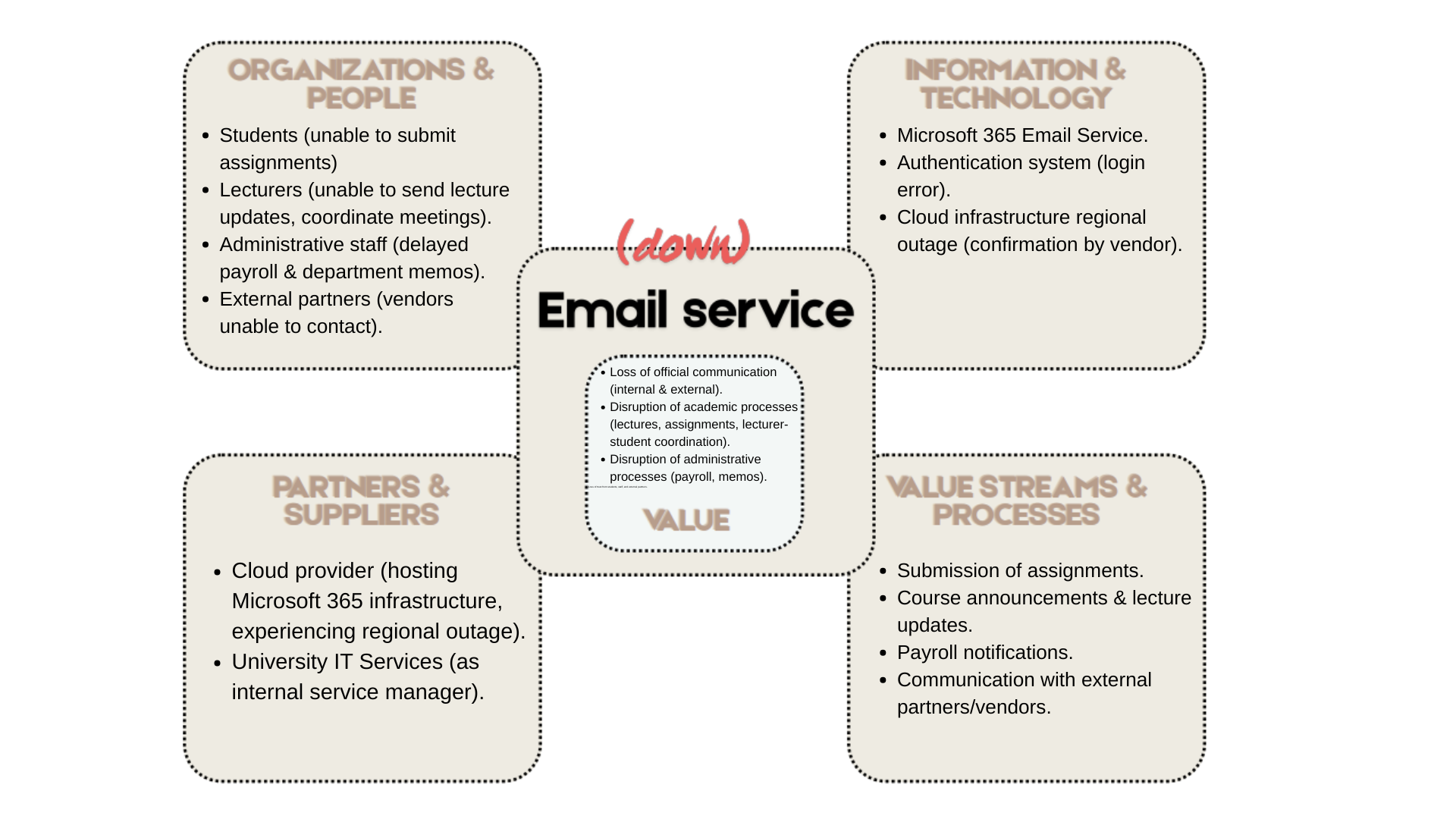
- Students: Cannot submit assignments via email; miss important course announcements.
- Faculty: Cannot send lecture updates or coordinate meetings.
- Administration: Payroll notifications and departmental memos delayed.
- External Partners: Prospective students and vendors cannot contact university staff.
Investigation:
- IT Help Desk reports 300+ tickets in the first hour.
- System logs show authentication failures.
- Cloud vendor status page confirms a regional outage.
Using the four dimensions framework, I mapped the impacts as follows:
Homework: Reverse Engineering Value – Google Drive
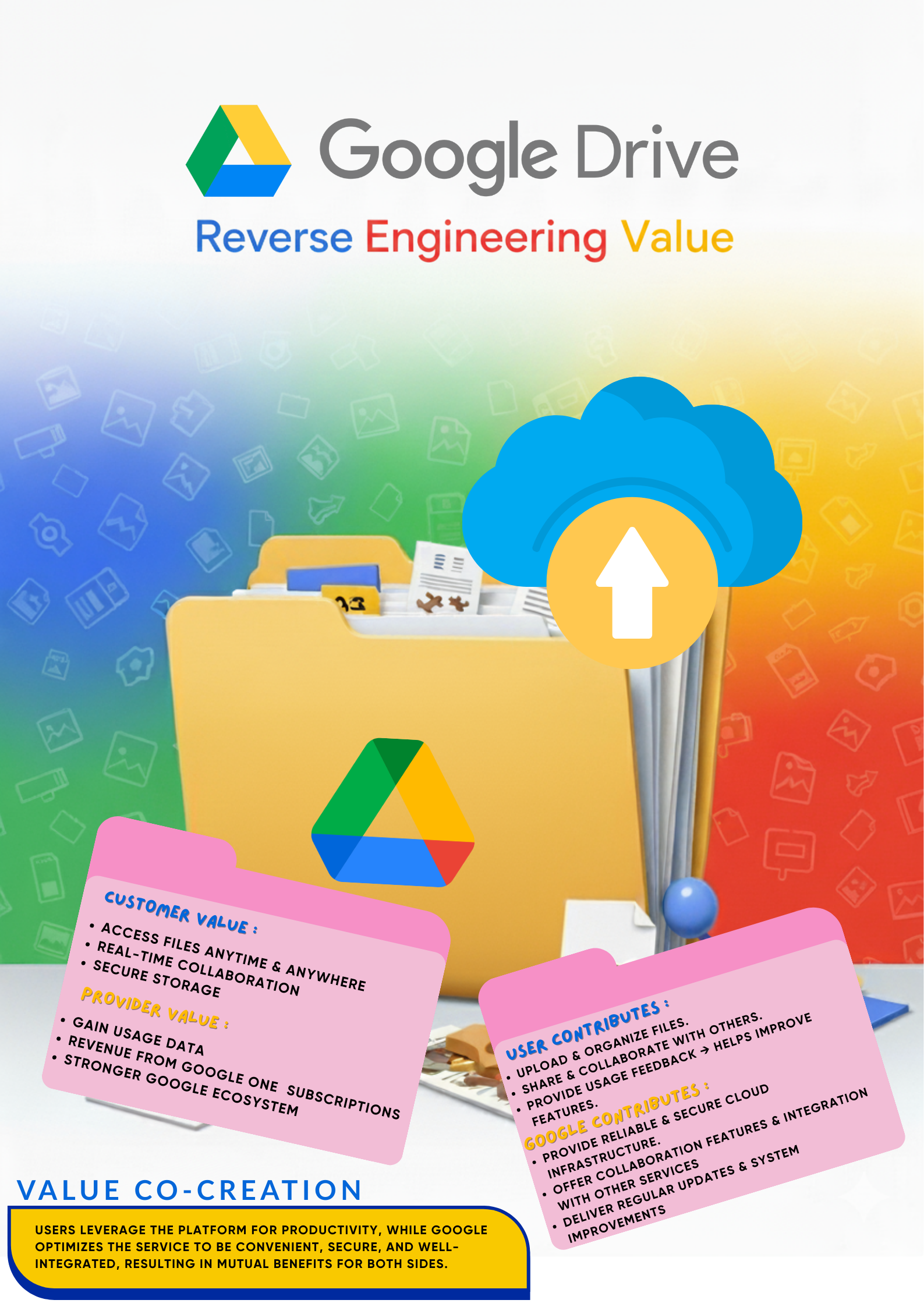
For another assignment, I created a digital poster “Reverse Engineering Value” to visually explain the value of Google Drive as an IT service. This assignment required me to define value from two perspectives:
- Customer Value: Google Drive allows me to securely store files, access them anywhere, and collaborate with others in real-time.
- Provider Value: For Google, the service increases user engagement, drives cloud adoption, and supports monetization through enterprise plans.
I also identified co-creation points where both users and the provider contribute to value:
- Users upload, share, and organize files.
- Google provides storage infrastructure, security, and collaboration tools to enhance usability.
Reflection
This week’s activities provided a solid foundation in IT Service Management (ITSM) and highlighted the practical importance of the four dimensions in real-world scenarios. Creating a Mind Map helped me visualize key concepts, while the university email outage case study demonstrated how disruptions can impact people, technology, partners, processes, and value. Additionally, designing the Reverse Engineering Value poster for Google Drive reinforced the idea of co-creation of value between service providers and users. Overall, these exercises strengthened my understanding of how IT services contribute to organizational goals, why strategic planning in IT is essential, and how to analyze both successes and challenges in service delivery.