Week 2-ITIL4: The Four Dimensions and Guiding Principle
In the second week of IT Service Management (ITSM), we explored the core concepts of ITIL 4, focusing on the Four Dimensions of Service Management, the Service Value System (SVS), and the 7 Guiding Principles. Understanding these concepts is essential for designing, delivering, and improving IT services that co-create value with customers.
The Four Dimensions of Service Management
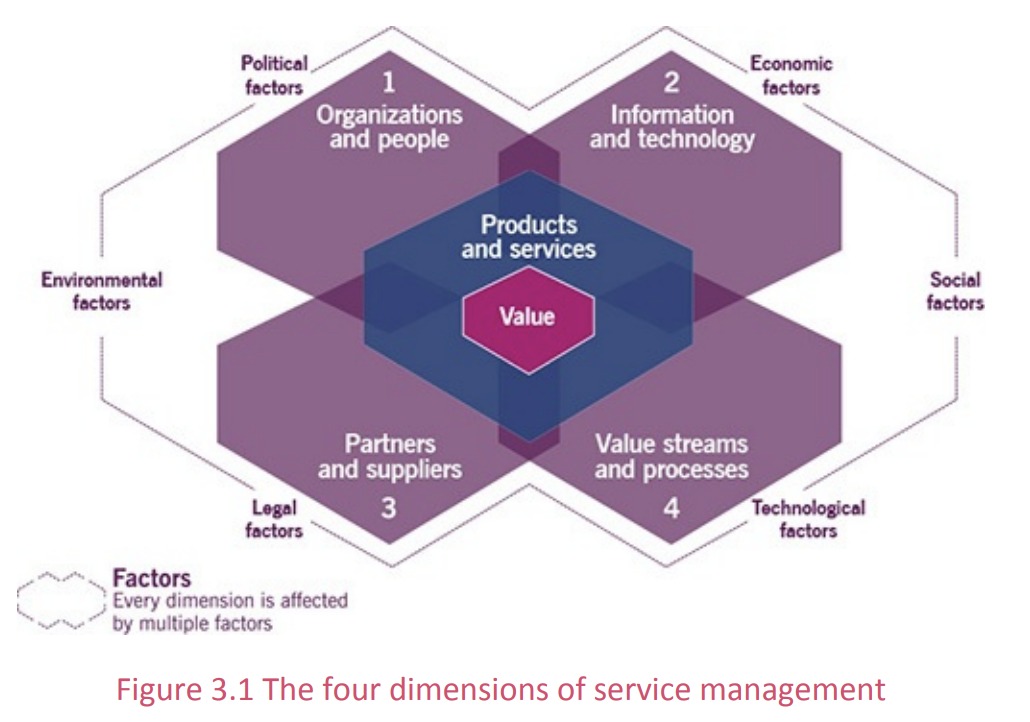
ITIL 4 defines four dimensions that ensure a holistic approach to service management. Each dimension must be considered when planning and delivering services:
-
Organizations & People
Focuses on the structure, culture, roles, and skills of the people involved. Successful service management requires the right talent, training, and collaboration. -
Information & Technology
Covers the data, knowledge, and technologies used to manage and deliver services. This includes software, hardware, cloud systems, and information security. -
Partners & Suppliers
Involves third parties, vendors, and service providers that contribute to service delivery. Collaboration and clear agreements are critical to ensure service quality. -
Value Streams & Processes
Focuses on how work is organized and executed. This includes workflows, process design, and integration to ensure services are delivered efficiently and effectively.
Service Value System (SVS)
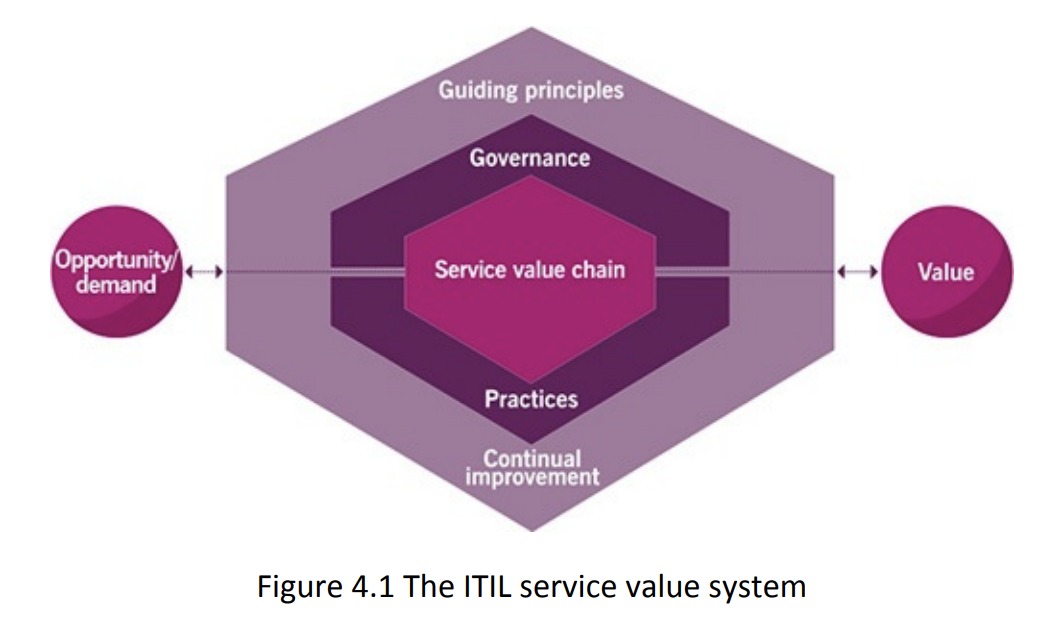
The Service Value System (SVS) ensures that the organization continually co-creates value with customers. Its components include:
- Guiding Principles – Universal recommendations to guide decision-making.
- Governance – Ensures policies and oversight are in place.
- Service Value Chain – Core activities that transform demand into value.
- Practices – Best practices, processes, and organizational resources.
- Continual Improvement – Supports ongoing enhancement of services, processes, and practices.
The SVS connects all dimensions and principles to help organizations deliver consistent, valuable services.
The 7 Guiding Principles of ITSM
ITIL 4 provides 7 guiding principles that help organizations align strategy, operations, and improvement efforts:
- Focus on Value – Always consider value from the customer’s perspective.
- Start Where You Are – Assess the current state before making changes.
- Progress Iteratively with Feedback – Improve step by step and adapt.
- Collaborate and Promote Visibility – Work together and make progress visible.
- Think and Work Holistically – Consider all dimensions and components.
- Keep It Simple and Practical – Avoid unnecessary complexity.
- Optimize and Automate – Make processes efficient and leverage technology.
Linking Dimensions and Guiding Principles
- Organizations & People → Emphasize collaboration, holistic thinking, and skills development.
- Information & Technology → Optimize and automate, keep technology practical, and support value delivery.
- Partners & Suppliers → Collaborate, make agreements visible, and integrate external contributions.
- Value Streams & Processes → Focus on value, progress iteratively, and simplify processes to enhance outcomes.
By aligning each dimension with guiding principles, organizations ensure services are delivered effectively, efficiently, and sustainably.
Class Activity
For this week’s activity, we were asked to read the ITIL Foundation ITIL 4 2nd edition and identify keywords for each of the four dimensions and the external factor:
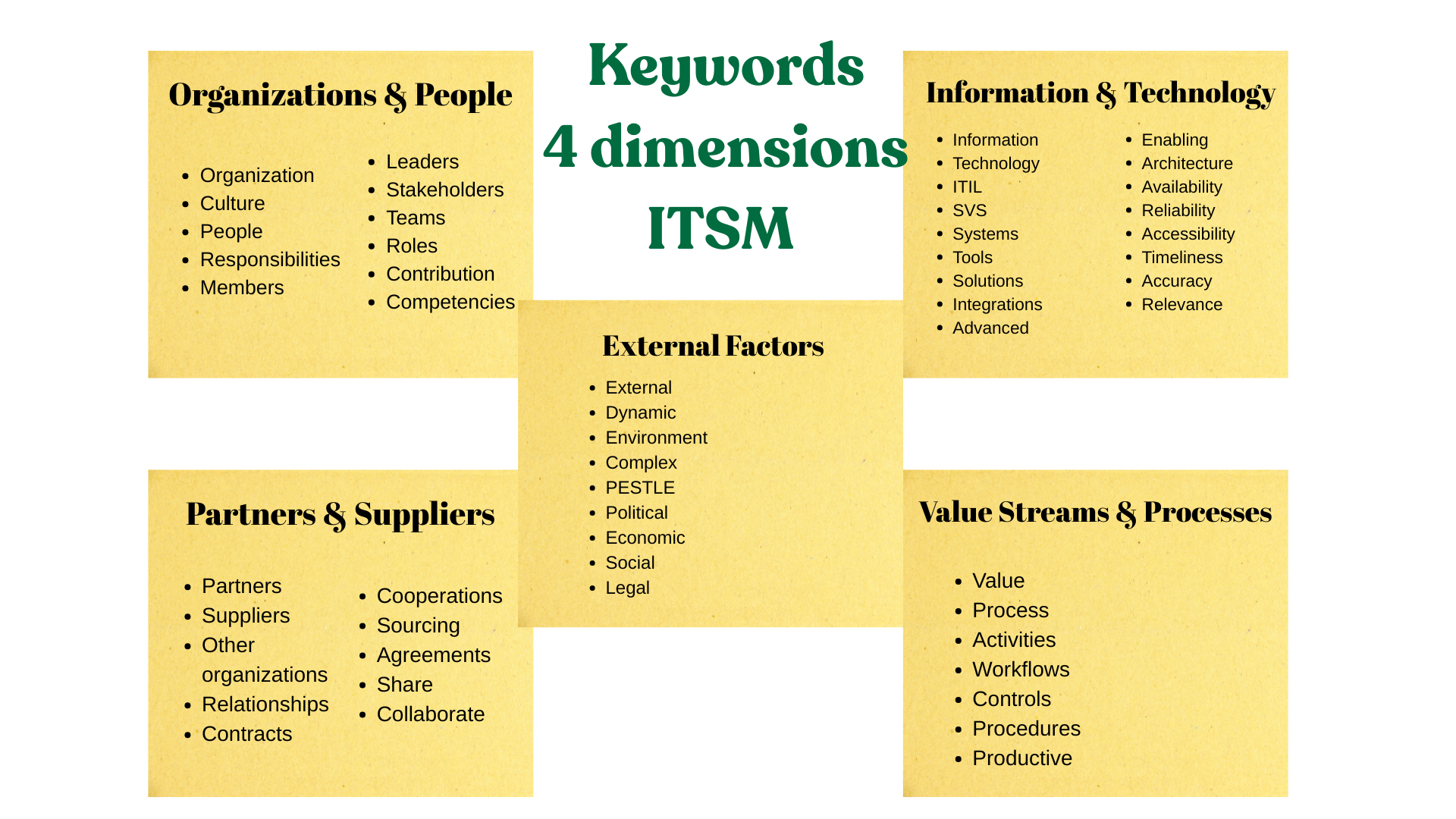
This exercise helped me link theory to practice, understand the key elements of each dimension, and see how they contribute to value co-creation in IT services.
Reflection
Week 2 deepened my understanding of ITIL 4 as a holistic framework. Mapping guiding principles to each dimension helped me appreciate how strategic decisions, processes, technology, and people work together to create value for customers and the organization. Reading the ITIL Foundation book and extracting keywords reinforced my learning and gave me practical insights into how IT services can be managed more effectively.